
4 Part Series, Part 2 - Women’s Co-Housing: Reimagining Home, Support and Independence
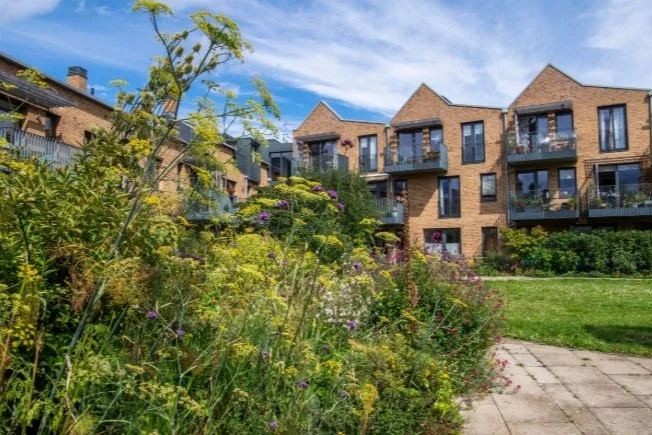
Image credit - New Ground Housing
For generations, the idea of ageing well has often been framed around staying in the family home, moving into sheltered housing, or eventually relying on formal care. But a growing interest in women-focused co-housing is challenging those assumptions — and asking a different question: what if home could offer both independence and community?
Women’s co-housing brings together private homes with shared spaces, resources and responsibilities. It is not communal living in the traditional sense. Residents retain their own front doors, kitchens and private lives, while choosing to share gardens, guest rooms, laundry facilities, meals, activities and, importantly, a network of mutual support.
Designing out loneliness
Loneliness is increasingly recognised as a significant challenge, particularly in later life. Co-housing offers an architectural and social response by making everyday interaction easier without making it compulsory.
A leading UK example is New Ground in High Barnet, created by Older Women’s Co-Housing (OWCH). The 25-home community, completed in 2016, was developed by a group of women over 50 who wanted an alternative to living alone as they aged. Homes are arranged around shared facilities and a communal garden, creating opportunities for both planned and spontaneous encounters.
The principle is simple but powerful: you can be independent without being isolated.
Research into New Ground has found that its combination of private and shared spaces, resident-led organisation and opportunities for social interaction can support neighbourliness and help address factors associated with loneliness.
Sharing more than space
Co-housing is also about sharing resources and responsibilities. At New Ground, residents contribute to the running of their community through activities such as gardening, communal meals and management groups. The model encourages people to "look out for" one another rather than assuming responsibility for one another.
That distinction matters. Good co-housing doesn't remove independence — it strengthens it by creating a support network that residents can choose to use.
It can also make better use of space and resources. Shared guest accommodation, gardens, laundry facilities and social spaces can reduce the need for every household to provide everything individually, while creating valuable opportunities for connection.
What can architects learn?
For architects and designers, women's co-housing presents an opportunity to think beyond the individual dwelling.
The design of New Ground demonstrates the importance of thresholds, visibility and circulation. Private homes are carefully positioned around communal areas, allowing residents to encounter one another naturally while retaining control over when they participate. The scheme was also developed through a highly collaborative process, with OWCH members playing an active role in shaping the design.
This suggests that successful co-housing isn't simply about providing a communal room. The whole building can become an infrastructure for connection.
For SHA Architecture and Design, this raises an important wider question: how can we design homes that respond not just to where people live today, but to how their needs, relationships and communities may evolve over time?
A model with wider potential
Women's co-housing may have particular relevance as we rethink affordability, ageing and social connection. It offers an alternative to both isolation and institutional models of later-life housing, while giving residents a greater say in how they live.
New Ground took almost two decades to become reality, demonstrating that these communities require commitment, collaboration and new approaches to funding and delivery. But its success has helped demonstrate that ageing does not have to mean giving up independence — and that community does not have to mean giving up privacy.
Perhaps the most interesting lesson is that home is not simply a building. It is also the relationships, choices and sense of belonging that the building makes possible.
As housing needs continue to change, women’s co-housing offers architects, developers and communities an opportunity to reimagine what home can mean — at every stage of life.
SHA Architecture & Design. If you’re exploring new ways to design or invest in residential living, now is the time to think beyond the unit and consider the experience as a whole. Feel free to get in touch by emailing us or booking in a call.
T: +44 207 267 9679
WhatsApp: +44 7547 955 989
E: info@sha.uk.com
We would be happy to discuss how your home can better support the way you live.