
4 Part Series, Part 1 - Understanding Communal Living and Why It Matters
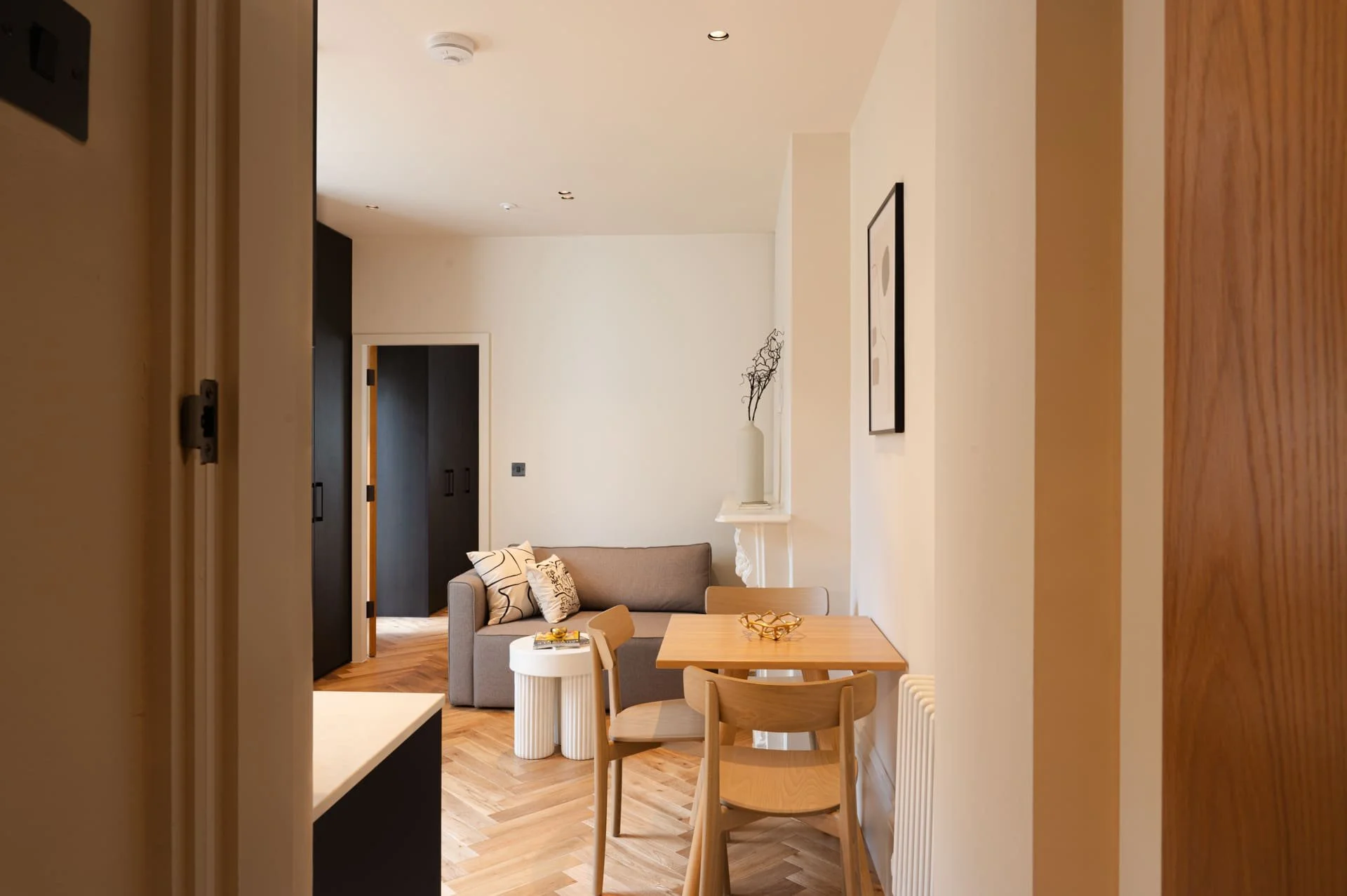
Image credit Gravity Coliving
For many of us, the idea of home is closely connected to privacy and independence. We have our own front door, kitchen, living room and, increasingly, our own private outdoor space.
But what happens when we rethink what home could be? What if some of the spaces we use every day were shared? What if neighbours were more than people we occasionally pass on the street? And what if our homes were designed not only around individual needs, but around the relationships that help communities thrive?
At SHA Architecture & Design, we are interested in how architecture can support this way of living. Our philosophy is simple: Live Together Better. Communal living is not about giving up privacy or adopting a particular lifestyle. It is about finding a better balance between private and shared space, and creating opportunities for people to connect naturally.
What is communal living?
Communal living can take many forms. It might mean a group of homes sharing a garden, workshop, dining space or play area. It could be co-housing, community-led housing, co-living, a monastery, hospice or simply a residential development with a welcoming communal garden. The important thing to remember is that communal living does not have to mean sharing everything.
A resident might have their own bedroom, bathroom, kitchen and living space, while also having access to shared facilities. The balance between the two is what makes these environments work. This is quite different from traditional communes, where residents may share much more of their finances, possessions and everyday responsibilities. Co-living offers another model, often combining private accommodation with shared amenities and professionally managed communal areas.
These approaches sit on a spectrum, but they all raise the same fundamental question: How can we live independently while also benefiting from living alongside other people?
We have always lived together
The idea of communal living can sometimes feel like a modern response to loneliness, housing pressures or changing lifestyles. But living collectively is hardly new. As Yuval Noah Harari explores in Sapiens: A Brief History of Humankind, one of the defining characteristics of our species is our ability to cooperate in large numbers. Human societies have always depended on networks of relationships, shared resources and collective activity.
For much of history, the boundary between private and communal life was also far less distinct than it is today. Extended families lived close together, neighbours supported one another, and shared spaces played an important role in everyday life.
In Britain, common land, village greens, shared paths and communal facilities once formed an important part of the relationship between individual households and the wider settlement.
Over time, industrialisation, urbanisation and changing patterns of land ownership transformed this relationship. The home increasingly became a private unit, separated from the wider community. Today, we are beginning to reconsider some of what may have been lost.
This does not mean returning to the past. Instead, it means asking whether some of the benefits of communal ways of living can be reinterpreted for contemporary life. Projects such as Marmalade Lane in Cambridge demonstrate how private homes can sit alongside common houses, gardens and other shared spaces, creating opportunities for interaction without sacrificing independence.
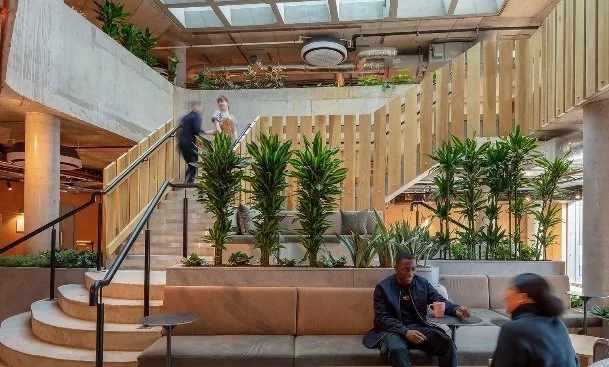
Image credit Folk Coliving
Why are people interested in communal living?
There is no single reason why people are attracted to communal ways of living. For some, it is about belonging. Modern life can be surprisingly isolating. We can live surrounded by thousands of people while having little meaningful interaction with those living closest to us. A well-designed communal environment can create opportunities for small, everyday encounters that gradually develop into familiarity and friendship. For others, it is about practicality.
Shared facilities can provide access to spaces and resources that might otherwise be expensive or difficult to provide individually. A workshop, guest room, play space, large dining area or shared garden can add value without every household needing its own version.
There are also environmental benefits. Sharing resources can reduce duplication and make more efficient use of land, energy and materials. Shared workspaces, gardens and car-sharing can all contribute to a lower-impact way of living.
And then there is mutual support. Families may benefit from having other people nearby. Older residents may value greater social connection. People working remotely may appreciate shared spaces where they can work alongside others.
The attraction is not necessarily about wanting to be surrounded by people all the time. Often, it is simply about knowing that people are there when you want them to be.
Some ways of living are purpose-driven, bringing together people who share a common interest, passion, or vocation — for example, a space created for artists or musicians. Others are shaped more by place, bringing people together because they live in or have a connection to a particular area or location. Often, however, these two approaches overlap, with a shared sense of place and a common purpose coming together to create a strong sense of community. We would refer to this as an intentional community.
Fostering connection without sacrificing privacy
This is where architecture becomes particularly important. One of the biggest misconceptions about communal living is that more community must mean less privacy.
It doesn't.
Successful communal environments provide a choice between interaction and retreat. Residents should be able to enjoy a quiet morning at home, while also having somewhere to meet a neighbour for coffee. The spaces between private and communal areas can be particularly important. A front doorstep, shared garden path, entrance courtyard, communal laundry or semi-private terrace might seem insignificant on a plan. In reality, these can become the places where everyday community develops. The most meaningful interactions are often not planned. They happen while collecting the post, making coffee, doing laundry or walking through a shared garden.
Architecture cannot create friendship. But it can create opportunities for it. Rethinking what “home” means. Communal living challenges the idea that the quality of a home is determined simply by how much private space each household has. Perhaps the more important question is how effectively the total space is used. A generous shared garden can provide something that a collection of small private gardens cannot. A shared workshop can replace the need for every household to have its own workspace. A common room can create a place for celebrations, meals or simply meeting a neighbour. The goal is not to make people socialise. It is to give people choice: privacy when they need it, connection when they want it, and spaces that support both.
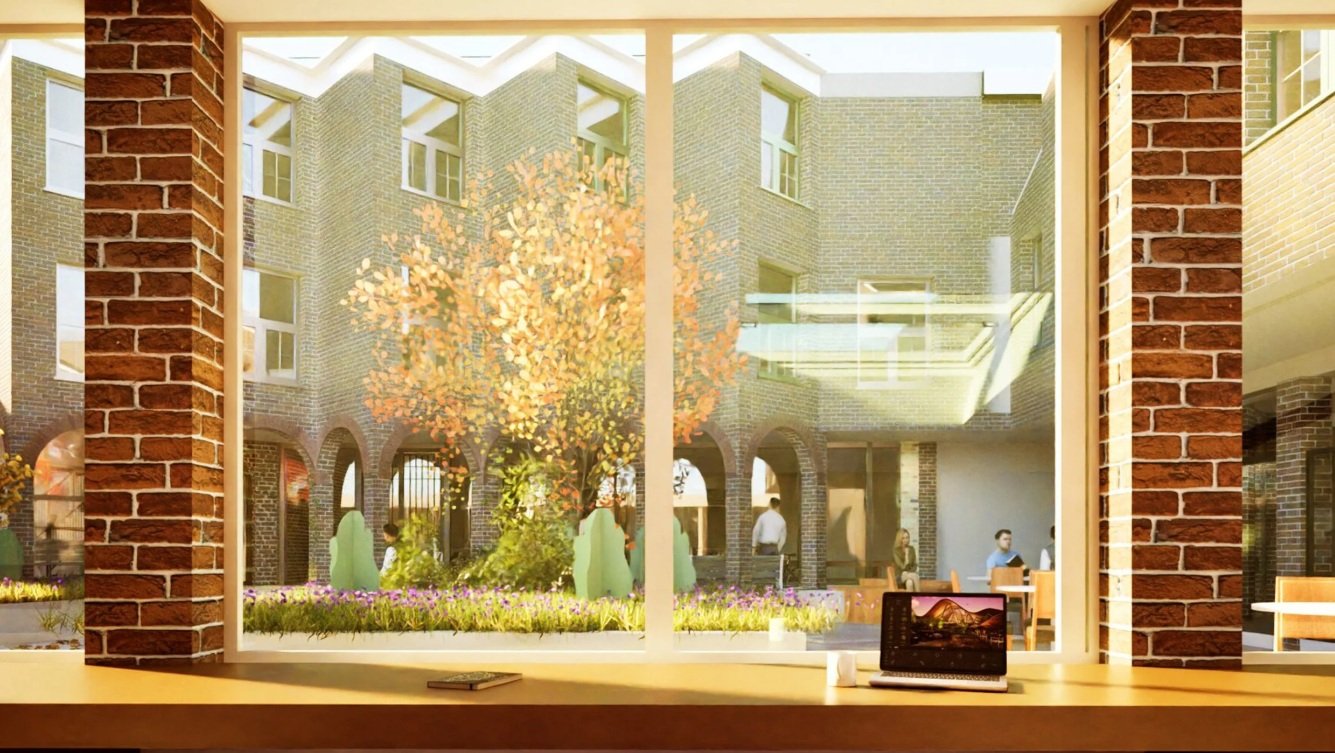
Living Together Better
Communal living is ultimately about more than sharing buildings. It is about reconsidering our relationship with the people and spaces around us. The best examples do not force togetherness. Instead, they create environments where connection can happen naturally, alongside privacy, independence and personal choice. For architects, this creates an exciting challenge. Designing a home is no longer only about what happens inside an individual dwelling. It is also about the spaces between homes, shared facilities, landscape, thresholds and the everyday moments that turn a collection of houses into a community.
At SHA Architecture & Design, this idea sits at the heart of our approach. We believe architecture should nurture meaningful social interaction and create spaces that help people Live Together Better. As housing needs continue to change, perhaps the future of home is not about choosing between independence and community. Perhaps it is about designing for both.
In Part 2, we will explore the evolution of co-housing, from early community experiments to some of the most successful contemporary projects, and ask what makes communal living work in practice.
SHA Architecture & Design. If you’re exploring new ways to design or invest in residential living, now is the time to think beyond the unit and consider the experience as a whole. Feel free to get in touch by emailing us or booking in a call.
T: +44 207 267 9679
WhatsApp: +44 7547 955 989
E: info@sha.uk.com
We would be happy to discuss how your home can better support the way you live.