
Practical Advice for Clients: "Adapting Your Home for Changing Needs: Flexible Designs for Better Living"

Image from project - Putney House
Designing for every stage of life:
Our homes are rarely static, yet many are designed without acknowledging how inevitable change is. Between children moving out and parents aging, family dynamics shift, and the home enters a completely different phase. A layout that works perfectly today may feel limiting and confining ten years from now. As family life changes, spaces can be rethought to suit a different pace of living.
When this shift is anticipated early on in the designing stage, the smallest decisions can make the biggest difference later on. From an architectural point of view, it’s about designing rooms with proportions, light, and circulation that allow these changes to happen naturally, so the home continues to support both lifestyle and use, long after children have moved on.
Flexible Designs for Better Living:
Designing for flexibility is about anticipating life’s natural progression with smart adaptable design changes that can evolve over time. Young families tend to prioritize open and connected spaces revolving around cooking, eating together, and spending quality time together. As children grow older, the same free-flowing layout now needs to adapt to quieter activities, supporting homework, learning new skills, and a greater sense of independence. In later stages, when children move on, priorities shift once again, more focused on social gatherings, entertaining, hosting, or simply enjoying a more composed and relaxed way of living.
Fortunately, these changes don’t have to lead to expensive and lengthy renovations. Flexible design allows that transition to feel smooth and intentional. Children bedrooms can be designed to be easily convertible into a studio, a home office, or a hobby space since it already has good lighting and built-in storage. Former living areas, once designed to host constant activity, can subtly transition into calmer, more comfortable spaces for working from home, exercising and pursuing creative interests.
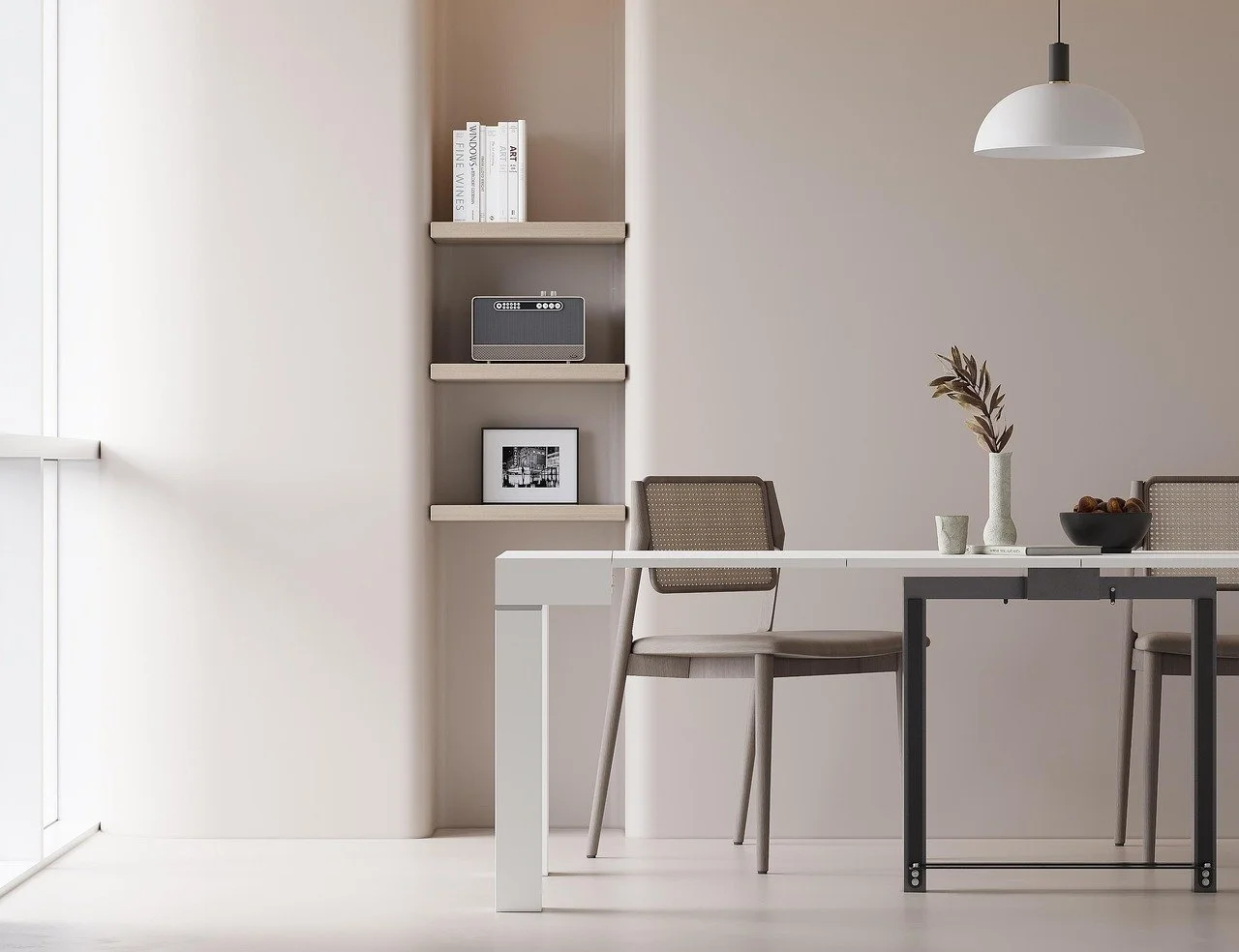
Image courtesy of Invis Furniture
Multigenerational living: designing for extended families
An increasingly important consideration that is often overlooked is multigenerational living, as families evolve, it’s increasingly common for households to reach a stage where elderly parents move in, driven by shared routines, financial sense or the desire to stay connected. These family members are often still active and independent, but they require quieter spaces, easier access and enough privacy while still feeling like a part of the household.
A common approach is transforming a ground-floor room into a bedroom with a nearby bathroom, allowing the relatives to live comfortably without navigating stairs. Another great way to repurpose a loft or garden room, that may have started out initially as family room or office is transforming it into a semi-independant parental suite, complete with it’s own private entrance or kitchenette.
When accessibility is addressed early in the design process, the transition feels natural rather than reactive, and can be absorbed seamlessly into the home’s initial layout, avoiding solutions that compromise the overall quality of the space, and ensuring it’s flexible and seamless for everyone living there.
Conclusion: Designing a home that grows with you
In the end, flexible design is not about predicting the future perfectly, it’s about allowing room for change. When extensions and renovations are designed with adaptability in mind, homes become more enjoyable, comfortable, and remain useful and relevant over time. By thinking early about how spaces might shift from busy family centres to more refined entertaining areas, or from single-family living to multigenerational use. They support families through growth, transition, and reinvention, without forcing unnecessary expenses and disruption to the family dynamics.