
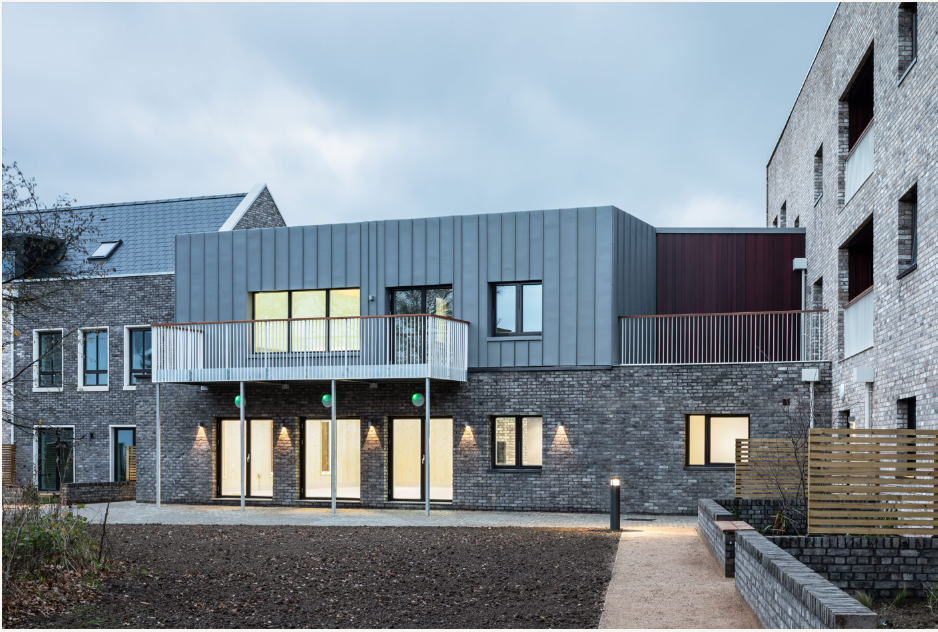
Image credit - Marmalade Lane
As housing affordability, climate change and artificial intelligence reshape the built environment, perhaps the biggest question is not what technology can do for us, but what kind of society we want to create.
We are living through a period of significant change. The way we work, communicate and organise our everyday lives is being transformed by economic pressures and technological advances. The built environment is changing too, with new approaches to housing, sustainability and the way we use our shared spaces.
Against this backdrop, community living is attracting renewed attention. Co-housing, co-living and community-led housing offer different ways of bringing people together, but they should not be seen as a replacement for existing communities or a solution to every challenge. They are part of a much bigger conversation about how we want to live.
Housing affordability in a changing economy
For many people, finding a suitable and affordable home has become increasingly difficult. Rising property prices, rents and borrowing costs have placed home ownership beyond the reach of many households. Younger generations in particular face a very different housing landscape from previous generations, while renters often experience insecurity and limited control over where they live. The consequences extend beyond the home itself, affecting people's ability to establish roots and maintain connections with their local communities.
The challenge is not simply about building more homes. It is also about what we build, where we build it and who can afford to live there. A focus on financial return and development efficiency can overlook the wider social value of housing. Smaller homes and higher density do not automatically create better places to live, particularly if privacy, access to outdoor space and opportunities for social interaction are compromised.
There are, however, opportunities to rethink how housing is provided. Co-housing, co-operatives and well-designed co-living schemes can offer alternative ways of sharing facilities and resources. Communal gardens, workspaces and dining areas can provide benefits that individual households might struggle to afford alone. These models will not solve the housing crisis, but they can contribute to a more diverse housing offer, where affordability is considered alongside quality of life.
Sustainability and climate resilience
The environmental challenges facing the built environment are equally pressing. Buildings need to respond to rising temperatures, changing weather patterns and increasing pressure on natural resources. Sustainability must therefore extend beyond energy performance to consider how buildings are constructed, the materials they use and how effectively they can adapt over time.
Community living offers opportunities to approach some of these challenges collectively. Shared facilities can reduce the need for duplicated resources, while communal gardens and green spaces can support biodiversity, improve wellbeing and help manage rainwater. Retaining existing buildings where appropriate, designing for natural ventilation and making better use of daylight are also important parts of creating more resilient places.
However, communal living is not automatically sustainable. Its success depends on thoughtful design, location and long-term management. Environmental responsibility needs to be considered alongside social value, creating neighbourhoods that are not only more resilient to climate change but also better places for people to live.
Artificial intelligence and the importance of human connection
Artificial intelligence is beginning to influence how buildings are designed, analysed and managed. It can help architects explore design options, assess environmental performance and process complex information more efficiently. These advances offer genuine opportunities, but they also raise questions about what we might lose as more aspects of everyday life become automated.
Technology can make communication easier while leaving people feeling less connected. It can save time, but does that time create more opportunity for human interaction, or simply make us busier? We need to consider how much we are influencing these changes and how much we are being influenced by them.
Architecture has a role in keeping people at the centre of this conversation. It cannot create friendships or guarantee a sense of belonging, but it can provide the conditions for interaction to happen naturally. A shared entrance, a welcoming communal room, a garden or simply somewhere to pause and talk can create opportunities for everyday connection. These spaces may not be technologically advanced, but their value is fundamentally human.
The challenge is to embrace the advantages of technology without allowing efficiency to become the only measure of progress.
Community living is part of the answer
It is important to remember that community already exists in many forms: through families, neighbours, local shops, schools, workplaces and public spaces. New communal developments should add to these relationships rather than become isolated communities of their own.
Good design should create a balance between private and shared space, allowing people to enjoy independence while having opportunities to connect with others. Not everyone wants to live communally, and privacy remains essential. The aim should not be to force interaction, but to make it easier when people want it.
Ultimately, the future of community living is about more than a particular housing model. It is about how we balance independence with connection, how we respond to environmental and economic pressures, and how we use technology without losing sight of what makes life meaningful.
At SHA Architecture & Design, these questions are informed by the hundreds of conversations I have had with clients, residents and people from many different backgrounds. I increasingly hear a common concern: that something of communal life is being gradually stripped away.
People talk about feeling less connected to those around them and having fewer opportunities for the everyday interactions that once formed a natural part of life. These are personal conversations, not abstract observations, and hearing them repeatedly gives me a tangible sense of a problem that many of us are trying to understand.
There is no single answer, and perhaps we are all still grappling with what the future should look like. For me, the starting point is a simple but important question: how do we want to live, and what kind of places will help us live that way?
SHA Architecture & Design. If you’re exploring new ways to design or invest in residential living, now is the time to think beyond the unit and consider the experience as a whole. Feel free to get in touch by emailing us or booking in a call.
T: +44 207 267 9679
WhatsApp: +44 7547 955 989
E: info@sha.uk.com
We would be happy to discuss how your home can better support the way you live.